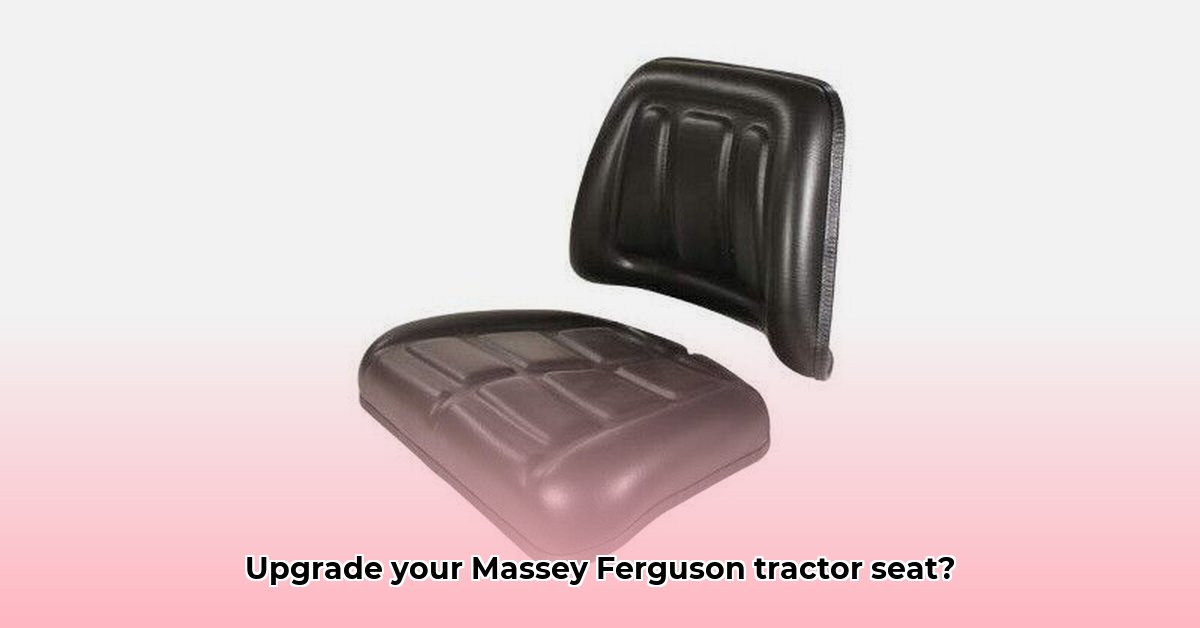
Replacing your Massey Ferguson tractor seat can significantly improve comfort and productivity. This guide provides a step-by-step process for replacing your seat, covering both OEM and aftermarket options, along with sustainability considerations. For more seat options, check out tractor seat options.
Identifying Your Tractor Model and Seat
Before ordering a replacement, accurately identify your Massey Ferguson tractor model. The model number is typically found on a plate near the steering wheel, under the hood, or on the tractor's side. Your owner's manual will provide the exact location. Note the serial number as well, as this can indicate variations within a model. Next, locate the seat's part number; this is usually found on a label on the seat itself. If not, taking detailed pictures from various angles will help in finding a compatible replacement. Write down any special features (e.g., suspension, adjustments).
Choosing a Replacement Seat: OEM vs. Aftermarket
You have two primary choices: Original Equipment Manufacturer (OEM) and aftermarket. OEM seats, sourced directly from Massey Ferguson or authorized suppliers, guarantee a perfect fit and typically offer higher quality and longer lifespans. They usually come with warranties, but they’re often more expensive and harder to obtain for older models. Aftermarket seats are generally more affordable but may vary in quality, fit, and warranty coverage. Consider the following:
| Feature | OEM Seat | Aftermarket Seat |
|---|---|---|
| Cost | Higher | Lower |
| Fit | Perfect fit guaranteed | May require adjustments or modifications |
| Quality | Superior materials and build | Variable quality |
| Warranty | Comprehensive warranty | Limited or no warranty |
| Availability | Can be limited, especially for older models | Generally easier to find |
The best choice depends on your budget and priorities. A tighter budget might necessitate an aftermarket option, while prioritizing longevity and a perfect fit favors OEM. Do you value peace of mind and a guaranteed fit, or are you comfortable with potentially more adjustments and a shorter warranty?
Step-by-Step Massey Ferguson Tractor Seat Replacement
Safety First! Always disconnect the tractor battery before beginning any work to prevent electrical hazards.
1. Removing the Old Seat (Estimated Time: 30 minutes):
1. Photograph the seat and its components from multiple angles; this is critical for reassembly.
2. Remove any levers, controls, or other attachments.  Again, take photos of their positions and connections.
3. Locate and remove the bolts or fasteners holding the seat to the tractor frame (usually underneath).  Support the seat to prevent sudden drops.
4. Carefully lower the seat to the ground.
2. Installing the New Seat (Estimated Time: 45 minutes):
1. Position the new seat on the tractor frame, ensuring proper alignment.
2. Securely fasten the seat with the appropriate bolts and fasteners, tightening them evenly.
3. Reconnect any previously removed levers and controls, referencing your photos.
3. Testing and Final Adjustments (Estimated Time: 15 minutes):
1. Reconnect the tractor battery.
2. Test all seat functions and adjustments.
3. Conduct a short test drive to ensure everything functions correctly and the seat is comfortable.
If any step seems challenging, consult your owner's manual or a qualified mechanic. Safety is paramount when working with machinery.
Sourcing Your New Seat: Finding the Right Parts
Locate OEM seats through authorized Massey Ferguson dealers or online parts retailers specializing in agricultural equipment. For aftermarket options, explore online marketplaces (eBay, Amazon), tractor parts suppliers, or even automotive parts retailers (for some universal models). Finding parts for older models may require more research; seek out specialty suppliers or vintage tractor parts websites. Prioritize suppliers committed to sustainable practices. Consider the environmental impact of your purchase, from manufacturing processes to shipping distances. Is there a local option to minimize the carbon footprint?
Maintaining Your New Seat: Extending Seat Lifespan
Regularly clean your new seat with an appropriate cleaner. Consider using a protective cover to protect it from the elements. Depending on the seat type, periodic lubrication may be necessary; consult your owner's manual for specific recommendations. Addressing any minor issues promptly will prevent more extensive damage and extend the seat's lifespan. Preventative maintenance is key. How can you minimize wear and tear to ensure longer use?
Conclusion: A Comfortable and Sustainable Choice
The choice between OEM and aftermarket seats depends on your budget and priorities. Carefully weigh the pros and cons of each option based on factors like quality, cost, longevity, and warranty. Remember, a comfortable operator is a more productive operator. Prioritizing sustainable sourcing further contributes to long-term cost-effectiveness and environmental responsibility. What is the most sustainable option in the long run?